
Restoring Metabolic Balance Through the Terrain
Erin Holston Singh, N.D.
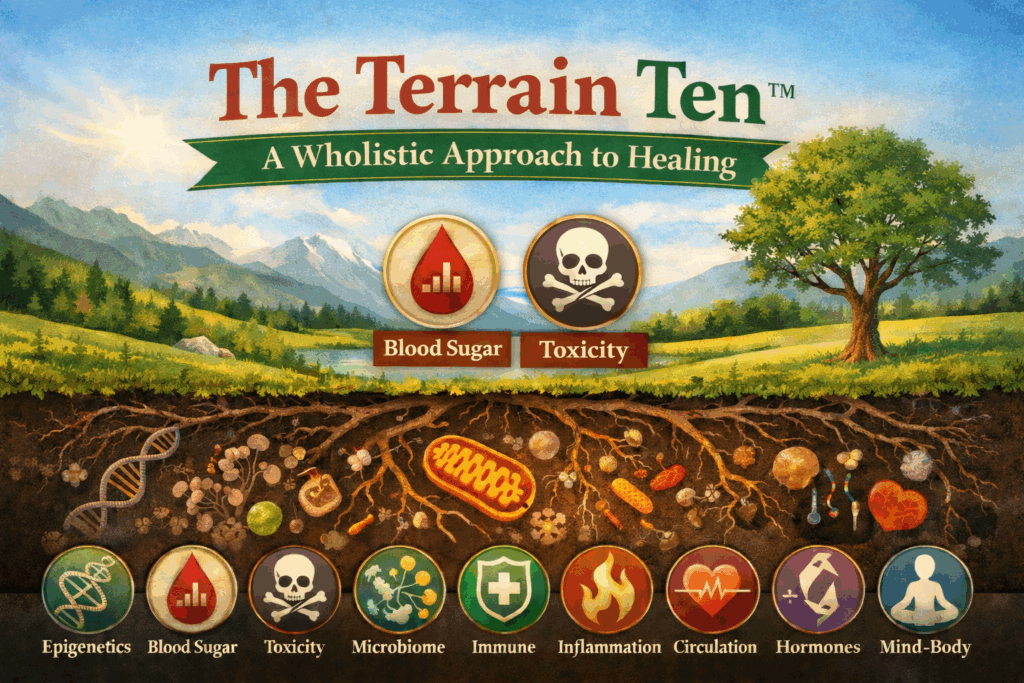
Welcome back to The Terrain Ten™ – The Key Interlinking Areas of Wellness. A terrain model that is developed by Dr. Nasha Winters. In previous articles, we introduced the foundational idea that illness does not appear out of nowhere—it grows silently over time in what we call the terrain, the internal environment of the body. We described ten interlocking factors that determine the health or illness of this terrain. Today, we focus on one of the most central, yet least recognized components of modern illness: blood sugar balance and metabolic health, and how it is closely tied to another area of The Terrain Ten: toxicity.
The Terrain Ten™ – Key Interlinking Areas of Wellness,
and the areas we will be expounding on in future
installments of this series…
1. Epigenetics
2. Blood Sugar Balance
3. Toxic Burden
4. Microbiome & Digestive Function
5. Immune Function
6. Inflammation and Oxidative Stress
7. Blood Circulation & Angiogenesis
8. Hormone Balance
9. Stress & Biorhythms
10. Mental & Emotional Health
From the outside, blood sugar may seem like a simple nutritional issue—what we eat, how much, and when. But the reality is far deeper. The rise of metabolic dysfunction—especially in the form of blood sugar dysregulation—is at the root of not just diabetes, but cancer, fatigue, obesity, hormonal imbalances, heart disease, and even anxiety and depression.
Let us look more closely at this dynamic and what can be done to reverse it.
The Historical Shift: From Whole Foods to Sugar-Laden Treats
Our ancestors lived with a much simpler diet. Grains were whole, fruits were seasonal, and sweeteners were rare and often reserved for special occasions. Meals were built around what could be grown or raised. Sugar, if it existed in the household at all, came in modest amounts—often in the form of molasses or honey.
Fast forward just two or three generations, and the picture has changed dramatically.
Even in Plain communities where traditional values persist, the volume and frequency of sugar consumption has crept steadily upward. Processed treats, sugary beverages, refined flours, and sweeteners—many of them added even to savory items—are now common in daily life. What was once a rare indulgence has become a staple.
But what’s even more alarming is that this shift has occurred alongside a silent rise in environmental toxicity, forming a dangerous feedback loop.
The Role of the Mitochondria: Your Cells’ Power Plants
To understand why sugar and toxicity are such a potent combination, we must take a brief look at the mitochondria—tiny structures in every cell that act as the “power plants” of the body. These mitochondria are responsible for turning food into energy.
In a healthy state, the mitochondria efficiently burn fat and sugar for energy. The healthiest and most adaptable body can switch easily between these fuels, depending on need. This is called metabolic flexibility.
But when we are constantly eating sugar—or foods that quickly turn into sugar (like white flour)—and our mitochondria are overwhelmed by environmental toxins (like pesticides or heavy metals), they stop functioning correctly. They lose flexibility. They become sluggish. And in some cases, they shut down entirely, forcing the body to rely on less efficient, damaging processes to produce energy.
This breakdown is one of the earliest signs of chronic illness. It is especially relevant in cancer, where the cells have lost their mitochondrial function altogether and revert to fermentation (a sugar-dependent energy process) to survive.
Terrain in Trouble: When Sugar Meets Toxins
Two of the Terrain Ten™—blood sugar balance and toxic burden—are now so deeply intertwined that they often must be addressed together.
- Excess sugar weakens mitochondrial function.
- Toxins damage mitochondrial membranes and DNA.
- Damaged mitochondria force the body into dependence on sugar.
- This fuels more inflammation, weight gain, hormone disruption, and disease.
This vicious cycle does not start with disease. It starts with years of hidden imbalance, quietly brewing beneath the surface, often without obvious symptoms.
Many people in the Plain clothes community are metabolically unwell and do not know it.
How to Know If Your Metabolic Terrain Is Suffering
You don’t need to be diabetic to have a blood sugar issue. In fact, most people with blood sugar imbalances are undiagnosed. Here are some common early signs:
- Afternoon fatigue
- Difficulty going more than 2–3 hours without eating
- Mood swings or irritability (“hangry”)
- Sugar cravings, especially after meals
- Belly fat despite eating healthy
- Waking between 2–4 AM
- Brain fog or memory problems
These are signs that the body is stuck in a sugar-dependent state. Over time, this fuels not just fatigue and weight gain, but deeper cellular dysfunction.
Reversing the Trend: Healing Starts at Home—and on the Farm
The good news is that metabolic damage is reversible—but it takes awareness and action.
1. Eat Real Food
Favor foods that are whole, unprocessed, and grown as close to home as possible. Build meals around vegetables, pasture-raised animal protein, good fats, and properly prepared grains in moderation. Cut down—or cut out—added sugars, refined flours, and sweet snacks. Try drinking water or herbal teas instead of sweetened beverages.
2. Reduce the Toxic Load
What we eat affects our mitochondria, but so does what we breathe, put on our skin, and spray on our fields. Consider:
- Using non-toxic cleaners in the home
- Choosing glass over plastic for food storage
- Avoiding herbicides and pesticides on farms and gardens
- Installing water filters in the home
- Removing mold from barns and basements
Healing our terrain means also healing our environment.
3. Support the Mitochondria
Allow your body time to rest from constant eating. Explore Intermittent fasting by confirming you never eat between 7pm and 8, 9, or even 10am or later. Focus on sleep, movement, sunshine, and reducing stress—all of which support mitochondrial repair.
In some cases, supplementation and deeper therapeutic support may be needed. But these simple shifts lay the foundation.
4. A Word About Children and Future Generations
One of the most sobering aspects of this issue is its effect on our children. Children today are growing up in a world where sugar is normalized and toxicity is unavoidable. Their small bodies are more vulnerable to this burden, and their mitochondria are less resilient than generations past.
By choosing differently—both in the kitchen and in the field—we can change this trajectory.
What’s Next…
In future installments, we will explore each of The Terrain Ten™ in detail, offering simple insights and guidance on how to restore each area—step by step.
This month in The Terrain Ten™ – The Key Interlinking Areas of Wellness, we explored (area 2,) blood sugar balance is inseparable from (area 3,) toxic burden—and how healing one supports healing the other.
This is not a quick fix, but a deeply respectful approach that works with the body, not against it. It is a return to natural law and to a way of seeing the body as part of the larger creation. If you or a loved one is facing illness—or simply wants to stay well—know this: the path to healing is not hidden. It begins with tending the terrain.
In future articles, we will continue to explore these areas one by one, offering practical, respectful guidance grounded in both science and nature.